Designed with WordPress
What is Landscape Design?
“Landscape design is an art form and a science
that seeks to create attractive, functional outdoor “rooms”
through horticultural science, spatial organization, and artful composition.”
Harley Grandone
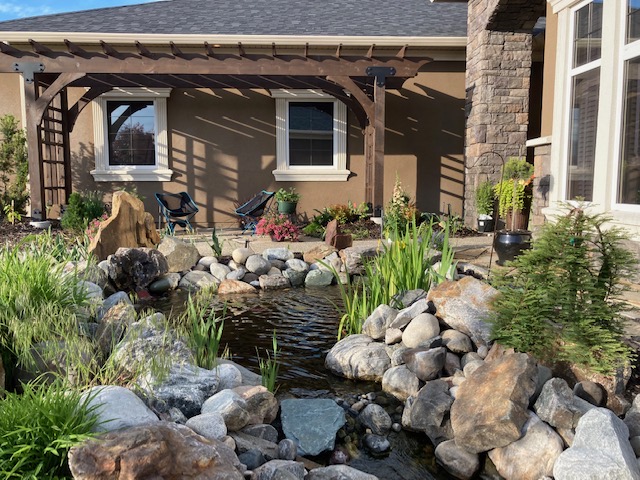
Creating the perfect Landscape Design:
It is important that a landscape design is both functional and artistically pleasing.
Functionality such as space usage, accessibility, maintenance (both short term and long term) and still be cost effective.
Important also is having the landscape look pleasing to the eye.
Four of the main principles of design are:
⦁ Unity = Consistency and repetition. By using and repeating similar plants or plant groups or rocks throughout the garden creates unity. Giving the garden a feeling that all belongs together.
⦁ Simplicity = Helps you focus on what’s important. Keeping your design simple will prevent creating cluttered unnatural landscape. Use fewer plant varieties and colours. Repeating plants throughout the landscape will provide continuity.
When using rocks, use less rocks but bigger ones to make a statement.
⦁ Balance = Symmetrical & Asymmetrical. Symmetrical balance is when the landscaping is equally divided. Both sides share the same shape and size of plants. Asymmetrical is where the garden may be equally divided but have different plant shapes and sizes, yet still it brings unity to the garden. Using repetition also provides natural transition from one side to the other.
⦁ Proportion = Refers to the size of things in relationship to others
Creating a good landscaping design is the same as creating a good piece of art. It then becomes all about the composition.
Incorporate leading lines within the garden to emphasize the areas of visual value.
There is also what is called the rule of thirds. A simple explanation for this is divide your garden visually into thirds instead of one or two. By placing features off centre, into three sectors, helps to create visual interest and rhythm.

